
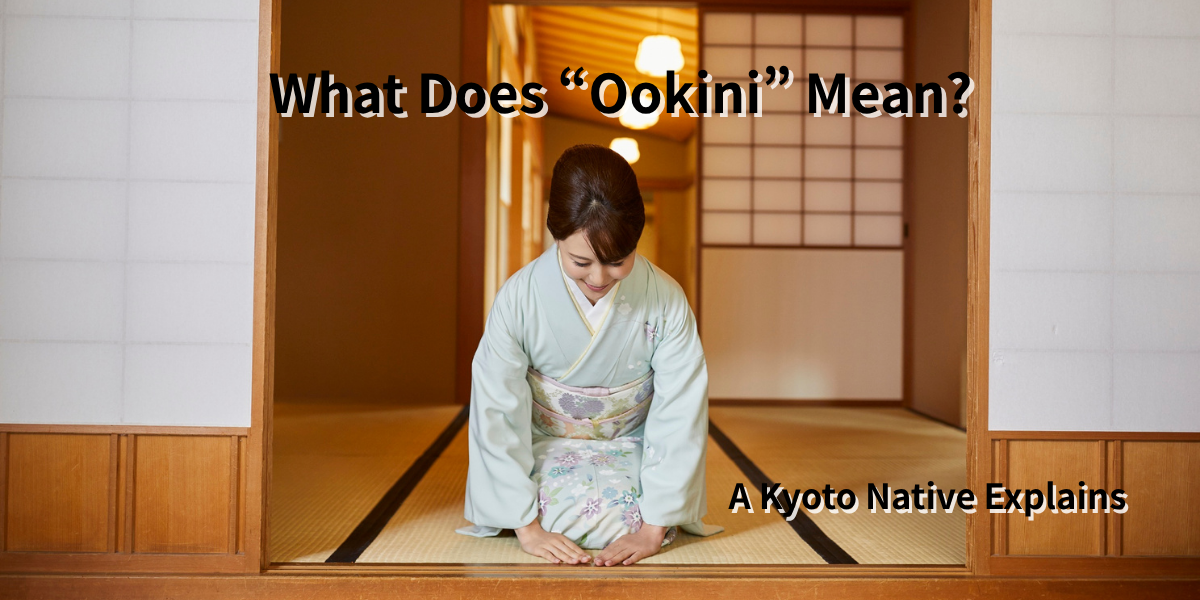
“Someone in Kyoto said ‘Ookini’ to me. What does it mean?”
“Is it different from saying ‘Arigatou’?”
When you visit Kyoto, you may hear shop staff or local people say “Ookini.”
As a Kyoto native, I’ll explain what “Ookini” means, where it comes from, whether people still use it today, and whether visitors can say it too.
What Does “Ookini” Mean?

Ookini is a traditional expression used in Kyoto, Osaka, and other parts of the Kansai region. Today, it simply means “Thank you.”
Originally, however, ookini meant “very much” or “greatly.” People would say “Ookini, arigatou,” which literally means “Thank you very much.”
Over time, ookini itself came to express gratitude, so today it is commonly used on its own as another way to say “thank you.”
Although people in both Kyoto and Osaka use the word, locals often notice a slight difference in pronunciation and intonation.
A Common Phrase: “Honma, Ookini”
You may also hear people say “Honma, ookini.”
While “ookini” simply means “thank you,” adding “honma”—a Kansai dialect word meaning “really” or “truly”—makes the expression warmer and more heartfelt.
“Honma, ookini” is similar to saying “Thank you very much” or “I really appreciate it.”
If you hear this expression during your trip, you’ll know someone is expressing sincere gratitude.
Do People in Kyoto Still Say “Ookini”?
Yes. Ookini is still used in Kyoto today.
You’re most likely to hear it from:
- Older generations
- Shop owners and staff at long-established stores
- People working in traditional shopping streets
Younger people are generally more likely to say “Arigatou” or “Arigatou gozaimasu,” so ookini is not as common in everyday conversation as it once was.
If someone says “Ookini” to you during your visit, consider it a small but memorable part of Kyoto’s local culture.
Should Visitors Say “Ookini”?
Absolutely.
There’s no special rule that says only Kyoto locals can use the word. If you say “Ookini” with genuine appreciation, people will understand and usually smile.
As a Kyoto native, I can tell you that many locals are happy when visitors try using local words like “Ookini.” Even if your pronunciation isn’t perfect, most people will appreciate the gesture.
That said, you don’t have to use it. Saying “Arigatou gozaimasu” or simply “Thank you” is just as natural.
The most important thing isn’t the word itself—it’s expressing your gratitude sincerely.
Final Thoughts

Ookini is a word of gratitude that is still cherished in Kyoto today.
Knowing what it means can make conversations with shop staff and encounters with local people even more enjoyable during your trip.
When you visit Kyoto, listen for the word “Ookini.”
And if you have the chance, don’t be afraid to try saying it yourself. It might just be the start of a warm connection with the people you meet.
Written by Konoka, a Kyoto native.


コメント